
Frequently asked questions

-
Neuro-audiological counselling™ brings together three things that usually sit apart: audiological understanding, cognitive behaviour therapy for tinnitus, and sound therapy.
As an audiologist, I understand how hearing works and what's happening in your auditory system when you have tinnitus. As a counsellor, I work with the thoughts, emotions, and nervous system responses that build up around the sound over time. Sound therapy supports the process alongside both.
Bringing these together in one practice means your care addresses the sound, your brain's response to it, and how it's affecting your life, all grounded in evidence-based treatment.
-
This is one of the most common things people say when they first get in touch. Often you've had your hearing checked, been cleared by an ENT, and sent home with no real plan. The testing was looking for something to fix in the ear, and when nothing turns up, the conversation tends to stop there. The work here starts at that exact point. Tinnitus is a symptom from brain activity, but how much it intrudes on your life, your sleep, and your attention can change a great deal. That's what the programs are built around.
-
No referral is needed to book. That said, it's a good idea to have had your hearing checked and any medical causes ruled out first, particularly if your tinnitus is new, only in one ear, or came on suddenly. If you haven't done that yet, I can talk you through it. If you do have a referral or reports from your GP or ENT, bring them along, as they help build a fuller picture.
-
Both work equally well for tinnitus care and any counselling practice. Many health services in Australia have adopted telehealth as standard or an additional treatment delivery option. Most of what we do together is conversation, education, and practising strategies, all of which translate easily to video sessions and your in between session secure app. Most clients choose telehealth for the convenience, since it means taking part from anywhere in Australia without travel. In-person sessions are available in Katoomba NSW if you'd prefer to meet face to face. We can talk it through if you're unsure which suits you.
-
In person sessions are held within an established holistic health practice in Katoomba NSW. As most clients choose telehealth, spaces are limited. Clients attend the clinic from all over Australia, hence telehealth works very well to reduce geographical difficulties and provide access for clients with disabilities or illnesses.
-
You don't need to work this out on your own. Everyone starts with an Initial Tinnitus & Lifestyle Assessment, which is where we look at your tinnitus, your hearing, and how it's affecting your daily life. From there I'll recommend the plan that fits the severity and impact tinnitus is having. Your treatment plan may be shorter nd more foundational, or a fuller course of CBT for Tinnitus. The recommendation is always based on your situation, not a one-size-fits-all path.
-
The assessment is a 90-minute session and it's the starting point for everyone. Before we meet, you'll complete a couple of short questionnaires so we're not spending the session on paperwork. During the session we talk through your tinnitus history, how it's affecting your sleep, mood, concentration, and day-to-day life, and what you're hoping for. By the end you'll have a clear picture of what's going on and a recommended way forward, with the full cost of any treatment path discussed before you decide whether to go ahead.
-
The plans are matched to how much your tinnitus is affecting you, and they build on each other.
Tinnitus Foundations (5 weeks) suits mild distress and covers the essentials: understanding your tinnitus, sleep, concentration, and managing the thoughts and emotions that come with it.
Tinnitus Habituation Program (7 weeks) is for moderate distress and adds structured sound therapy, a focused sleep plan, and work on attention.
CBT for Tinnitus (10 weeks) is for moderate-to-severe distress and works in depth with the thoughts, beliefs, and avoidance patterns that keep tinnitus distressing.
CBT for Tinnitus+ extends that with three further review sessions for more complex situations.
The assessment is what tells us which of these fits you.
-
Each treatment plan combines live sessions with Gabrielle and activities you work through in your own time. The live sessions run by telehealth or in person. Between sessions, you'll have access to short readings, practices, and reflections through a secure app (desktop and phone options) made for this kind of structured care. Bookings and any questionnaires are handled through the clinic’s management portal. None of it is complicated, and Gabrielle will walk you through how it all works in session one of your plan.
-
Neuromonics is a structured sound therapy program over several months, and it can be a good fit for many people, on its own or alongside other treatment plans. Whether it suits you depends on your tinnitus and your goals, which is something we'd look at together during the assessment rather than deciding in advance. The clinic offers intakes at various points across the year to clients committed to a long term sound therapy habituation protocol with Gabrielle’s support
-
Everyone starts with the Initial Tinnitus & Lifestyle Assessment, which is $350 for a 90-minute session and is not covered by Medicare or private health insurance. Treatment plan fees vary depending on which suits you, and you'll have the full cost before you commit to anything. Medicare doesn't cover these services. The Blue Mountains Tinnitus Clinic is a private billing clinic. To make this affordable to all clients, there are various treatment plans available, and paying in blocks is an option. Gabrielle will discuss this with you at your assessment.
-
I want to be honest with you here, because there's a lot of misleading information out there. There's no treatment that reliably switches tinnitus off as a “cure”, and I won't promise one. Tinnitus is a symptom of a disrupted auditory system. What does change, and what the evidence supports, is how much tinnitus intrudes on your life. Many people reach a point where the sound is still there but no longer holds their attention, disturbs their sleep, or shapes their days. That process is called habituation, and it's what the treatment plans are built to support.
Outcomes and timeframes vary because everyone’s tinnitus and reactions to it vary. However, neuroscience recognises the ability of the brain to habituate to tinnitus and live a better quality of life. The effort and attention you put into your treatment plan is important and Gabrielle is here to encourage you throughout the week via you app text function.
Service information
Before you book, it helps to know how the clinic works. Below you’ll find practical details: who Gabrielle works with, how sessions run, fees, privacy and confidentiality, and what to do if you need urgent help. If anything isn’t covered here, please get in touch and ask via email: hello@bluemountainstinnitusclinic.com.au
-
The clinic works with adults aged 18 and over who are living with tinnitus. Most people come to the clinic after they’ve had their hearing tested and been told there’s nothing more to be done, and they’re looking for evidence - based support for tinnitus relief. Sessions are available via telehealth Australia-wide and in-person in Katoomba NSW.
-
Every client starts with an initial Tinnitus & Lifestyle Assessment, $350. This is where we build a picture of your tinnitus and how it is affecting your daily life. From there, Gabrielle recommends the treatment plan that suits your situation.
Treatment plans run over several weeks and are priced as a whole, so you know the full fee before you decide on next steps. Treatment plan fees start from $1400, with payment plans available. You’ll receive an information sheet with all fees at your assessment.
The Blue Mountains Tinnitus Clinic is a private billing clinic, and these services are not covered by Medicare.
-
If you need to reschedule or cancel your assessment appointment, please give at least 48 hours notice so the time can be offered to someone else. late cancellations and missed appointments are charged at the full fee. I understand that life happens, so if something unavoidable comes up, please get in touch at: hello@bluemountainstinnitusclinic.com.au
In the programs/treatment plans, the same 48 hour policy applies, even if you have paid ahead in blocks. Non attendance is taken as a paid session.
-
What you share stays private. Your records are stored securely in the clinic’s practice management system that complies with Australian Privacy laws. Your information isn’t shared with anyone outside the clinic without your written consent. There are a few limits to this, which the law requires of all practitioners: if there’s a serious risk of harm to you or someone else, or if records are subpoenaed by court. If Gabrielle needs to co-ordinate your care with your GP and/or other treating doctor/s or practitioners, she will discuss this with you first
-
Gabrielle does text clients during the week within their secure app that delivers therapeutic activities. This app is not for crisis support. The clinic doesn’t provide crisis or emergency care, and Gabrielle is not able to respond to messages between sessions of this nature. If you’re in an emergency, or worried about your immediate safety, please call 000. If you’re going through a hard time and need to talk to someone now, Lifeline is available 14 hours on 13 11 14. Also, Beyond Blue on 1300 22 4635. These services are free and staffed by people trained to help in emergency mental health support.

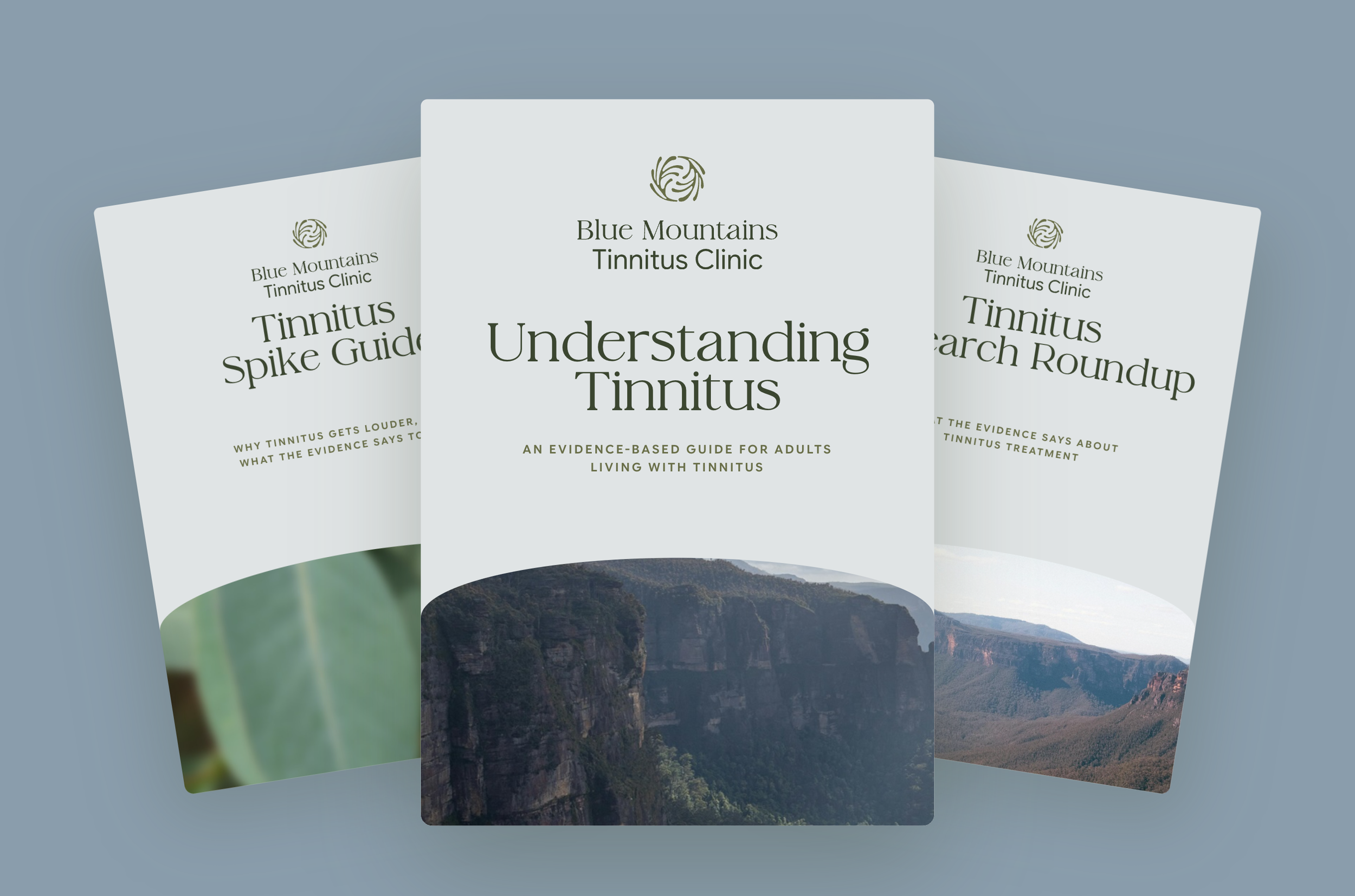
DOWNLOAD FOR FREE
Tinnitus resource pack
Everything you need to understand tinnitus: Tinnitus Guide ebook, Spike Guide, Research roundup, and the tinnitus couch monthly newsletter. Unsubscribe at any time.